ULTIMATE CELL®
CONTINUOUS COMBUSTION
Greater Efficiency / Lower Environmental Impact
UC3 – Ultimate Cell® Continuous Combustion hydrogen technology is designed to optimize continuous combustion processes in industrial plants, such as cement plants, municipal solid waste incineration, glass, pulp, steel, and mega power plants, amongst other applications.
This technology is developed and sold exclusively by UTIS Company. An innovative hydrogen technology that significantly enhances the characteristics of conventional continuous combustion processes.
Substantially improving the process and reducing its related emissions. With an estimated patent value in the tens of millions of euros. The UC3 system is covered globally by a product-liability insurance policy to the value of 10M€ with AIG insurance.

A technology that improves combustion efficiency through the injection of specific amounts of hydrogen gas “H2”.
Hydrogen offers an effective opportunity to amplify continuous-combustion output in industrial applications. The scientific principle of our technology is the central production and injection of precisely determined, pressurized amounts of hydrogen gas (H2) and oxygen gas (O2) into the combustion chamber. This technology is designed to optimize the industrial continuous-combustion reaction. When operational, the UC3 – Ultimate Cell ® initiates an electrolysis reaction within its PEM electrolyzer (which can range in size), resulting in the chemical separation of hydrogen (H2) and oxygen (O2) molecules. These H2 and O2 molecules are injected with controlled pressure, per application operational needs, into the combustion stream.
This catalytic process intensifies the combustion, increasing its efficiency and lowering its related CO2 emissions by utilizing the chemical integration of hydrogen gas as a catalyst for the combustion of hydrocarbon fuel (petroleum fossil fuels).
UC3 technology has overcome all design challenges to reduce industrial CAPEX requirements cost-effectively.
UC3 - Ultimate Cell ® Continuous Combustion technology optimizes combustion making it more efficient and with less environmental impact.


Continuous Combustion
Process Optimization
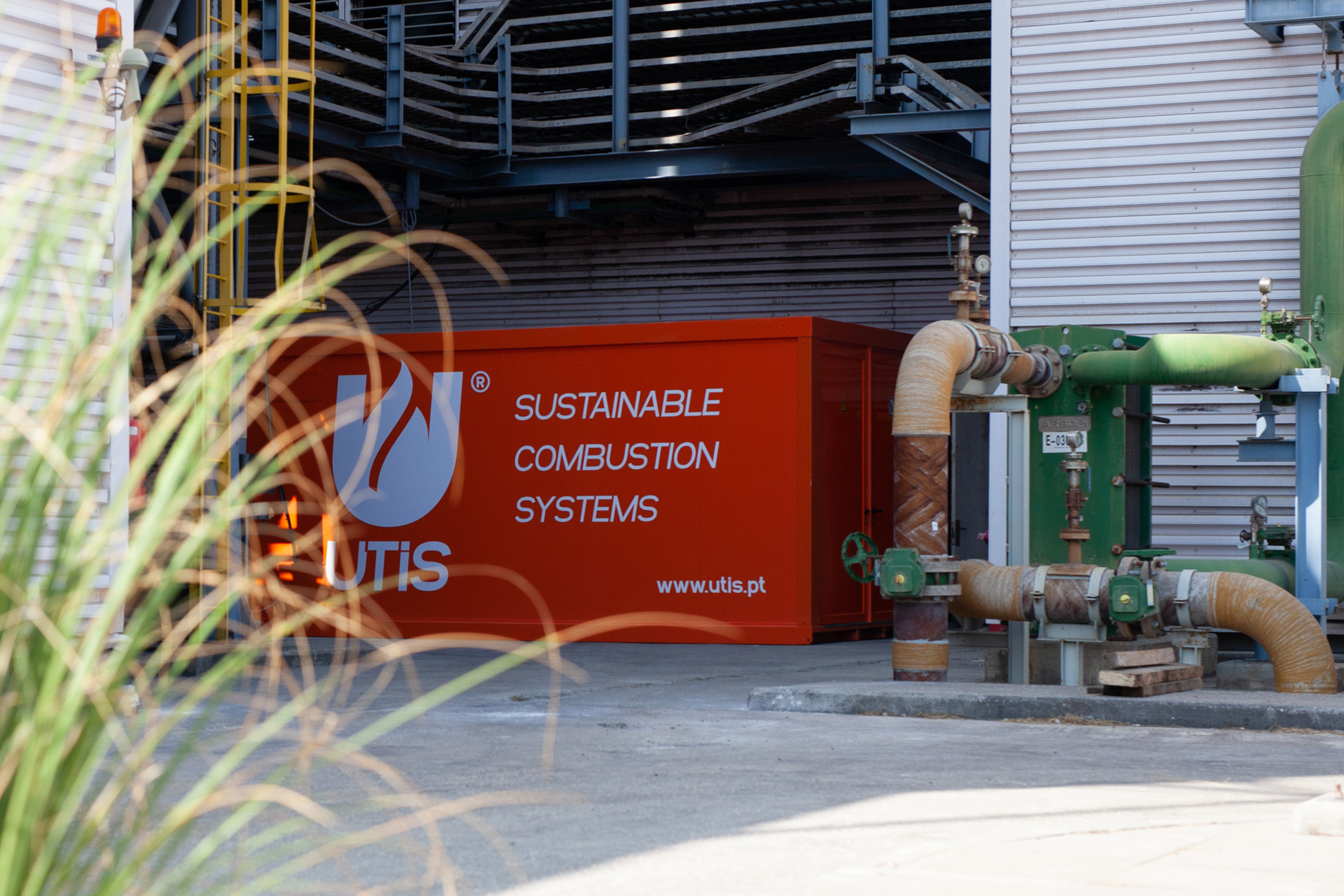
The UC3 system is supplied ready-to-use (Plug & Play) in a container format, including all the necessary elements to ensure the autonomous and safe generation and supply of hydrogen and oxygen.
The gases produced are obtained through the electrolysis of water. The system requires only electrical power and a water supply, and is easily installed with minimal modifications to the combustion process to be optimized.
In practice, these gases will improve the combustion efficiency of the process to be optimized, with the assistance of UTIS’s process engineering teams, focusing on the most appropriate process indicators for each case.
PEM
Electrolyzer
SYSTEM UCCC®

Productivity Increase
A more complete and efficient fuels burning.

Reduced Exhaust Gas Emission
Reduced consumption of fossil fuels

Speeds up the Combustion reaction and increases its rate
Efficiency of combustion through the injection of hydrogen and oxygen.

Reducing fuel consumption
Through the optimization of continuous combustion.

Safe and Reliable
Without hydrogen mid-storage between production and the point of consumption.

24 Hour/Day Control
24 hours/day Control and with emergency stop system.

Payback
Return on investment (ROI) fast and highly attractive.

Energy Savings
Significant reduction of Specific Thermal Consumption (kcal/kg).
A containerized system with simplified industrial installation.
UC3 system has been designed with consideration in mind for ease of industrial installation. Ensuring a trouble-free induction process. The system requires exclusively, electrical connection, communication, water supply, and sewage.
For all types of Industrial Continuous Combustion Applications
- Cement
- Glass
- Pulp and Paper
- Biomass power plants
- Municipal Solid Waste Incinerators
- Iron and Steel
- Power Plants
- Other Industries
Suited for use with all types of fuels.
- Mineral coal
- Natural gas
- Biomass
- Petcoke
- Alternative fuels
(waste tires, RDF, among others) - Municipal Solid Waste

Standard Features
- Automatic control
- Local control via HMI Interface
- Modbus TCP remote control and point-to-point digital hardware
- Automatic detection of alarms and communication
- H2 leakage detection system
- Adjustable gas production
- Manual emergency stop
- Automatic emergency stop
- Integrated system for production of electrolytes
from running water - Containerized system plug-in that only needs
electrical connection as well as potable water.